Korean Egg Roll (Gyeran Mari)
Gyeran mari is a Korean rolled omelette made by folding thin layers of beaten egg into a tender log, then slicing it into pieces. It works as a rice-side dish or a simple lunchbox component, and you can make it in an ordinary round skillet.
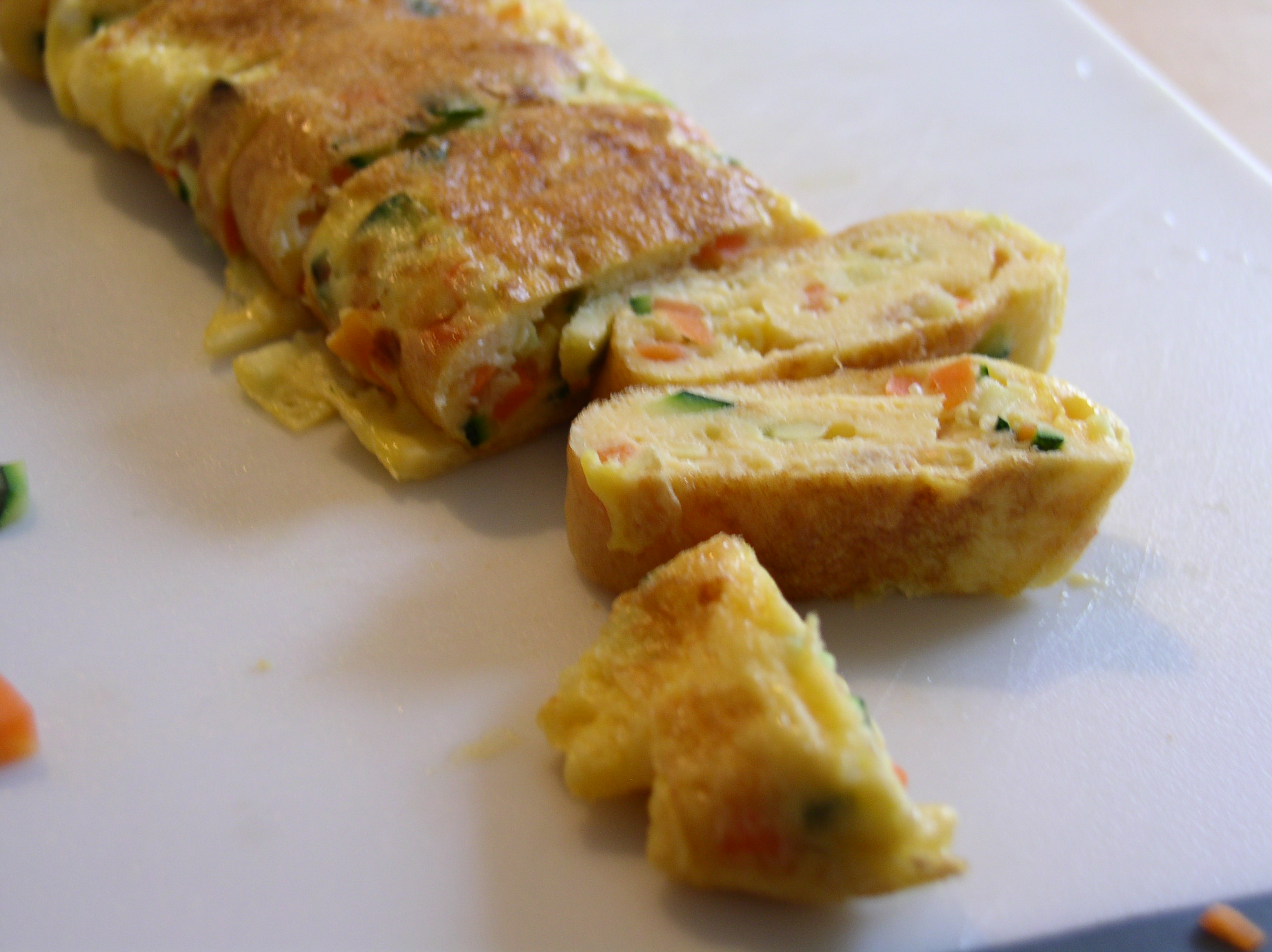
Korean Egg Roll (Gyeran Mari): Recipe Card
- Servings
- 2 side-dish servings
- Prep time
- 10 minutes
- Cook time
- 10 minutes
- Rest time
- 3 minutes
- Total time
- 23 minutes
Measures use US cups, tablespoons and teaspoons; metric equivalents are rounded kitchen conversions. For chopped ingredients, weights are the more consistent guide.
Ingredients
- 4 large eggs (about 200 g without shells)
- 1 tablespoon (15 mL) water
- 2 tablespoons (20 g) very finely diced carrot
- 2 tablespoons (12 g) very finely sliced scallion
- 1/8 teaspoon (0.75 g) fine table salt
- 1/16 teaspoon (0.15 g) ground black pepper
- 2 teaspoons (10 mL) neutral cooking oil, divided
Numbered steps
- Make a smooth egg mixture. Whisk the eggs, water, salt and pepper until the whites and yolks are fully blended. Stir in the carrot and scallion. Cut the vegetables into pieces no larger than about 1/8 inch (3 mm), so they cook quickly without tearing the layers.
- Heat and coat the pan. Warm an 8-inch (20-cm) nonstick skillet over medium-low heat for about 1 minute. Brush in 1 teaspoon (5 mL) oil. Keep the remaining oil nearby for the exposed pan between layers. The pan should be warm, not smoking.
- Start the first layer. Stir the egg mixture again so the vegetables are evenly distributed. Pour in about one-third, tilt to cover the pan thinly, and cook for 1 to 2 minutes. When the bottom is set and the top is tacky but no longer a pool of liquid, fold one edge over about 1 inch (2.5 cm), then continue folding into a loose roll, leaving a short flat edge attached.
- Join the next layers. Slide the roll to one side. Brush a little of the remaining oil onto the bare pan and add half the remaining egg mixture. Lift the attached flat edge slightly so new egg flows underneath and joins it. Cook for 1 to 2 minutes until tacky, then roll the existing log across the new layer. Repeat with the last of the egg, stirring it before pouring.
- Cook the center fully. Keep the finished roll seam-side down over low heat, turning onto its other sides as needed, for 2 to 3 minutes. It should feel gently firm with no liquid egg escaping; check the thickest part of the center with a food thermometer; it must reach 160°F (71°C). If still below that temperature, keep cooking gently and check again rather than relying on the clock.
- Rest and slice. Transfer to a clean board and rest for 3 minutes, included in the 23-minute total time. Slice with a sharp knife into pieces about 3/4 inch (2 cm) thick and serve.
Failure-prevention tips
- A thin, tacky layer bonds to the next one. A fully browned, dry sheet is more likely to separate, while a puddle of raw egg is too fragile to roll.
- Lower the heat or briefly lift the skillet off the burner if the underside browns before the top sets.
- If a layer tears, keep the broken section inside the next roll. A neat rectangle is optional; a fully cooked center is not.
- Do not overload the mixture with watery vegetables. The small amount in this card leaves enough egg to hold the roll together.
Ingredient swaps
- Carrot: use 2 tablespoons (20 g) finely diced red bell pepper, patted dry. Both are ordinary US-supermarket choices.
- Scallion: replace with 2 tablespoons (6 g) chopped chives, or omit if unavailable.
- Zucchini option: substitute 2 tablespoons (20 g) finely diced zucchini for the carrot, blotting away surface moisture first.
- Pan: an 8-inch round skillet is the default here. A rectangular omelette pan also works, but the pouring area changes, so judge thinness rather than using an identical number of layers.
Allergy notes and vegetarian variation
This recipe contains eggs and is already vegetarian, with no fish sauce, meat or cheese. It cannot be made egg-free by a simple one-for-one substitution while keeping the same rolled texture. The listed base ingredients contain no wheat, soy or dairy, but check cooking-oil labels and shared utensils if allergies are relevant. Adding cheese introduces milk; adding deli meat can introduce other allergens.
Storage and leftovers
Refrigerate within 2 hours, or within 1 hour if the temperature is above 90°F (32°C), in a shallow covered container at 40°F (4°C) or below. Use within 3 to 4 days. For a lunchbox, chill promptly and pack with frozen cold packs; do not rely on an unrefrigerated lunchbox to keep eggs safe. Reheat leftovers to 165°F (74°C), as measured with a food thermometer. Freezing is possible, but the layers can turn watery or rubbery, so refrigeration is preferable for texture.
What to cook next
Serve these egg slices with Easy Kimchi Fried Rice for a simple meal.
Frequently asked questions
Is this the same as a fried egg roll?
No. Gyeran mari is rolled cooked egg, not a filled wheat wrapper fried until crisp.
Do I need a special rolling pan?
No. A small nonstick round skillet and a flexible spatula are enough. The ends may be less square than those made in a rectangular pan.
Food safety sources
Editorial note: This recipe guide has not been kitchen-tested by our team. Cooking times are estimates; use the stated food-temperature and doneness checks. Last reviewed: October 16, 2026.